
This step builds upon the planning stage, building out the tasks you need to do in the work breakdown schedule. There are plenty of tools available, such as Adobe XD or InVision, that make this process much easier than ever before. A prototype method is an immediate estimation of the final product but is not dependent on strict planning. A prototype is mostly a working sample product that lets the customer test the product to make sure it meets the requirement of the customer. SDLC approach allows developers to make a considerable system document that makes sure that the requirements of the software are meeting the mentioned objectives and business goals. Moreover, automation can also aid in project management, resource allocation, and monitoring, providing real-time insights and data-driven decision-making.
In systems design, functions and operations are described in detail, including screen layouts, business rules, process diagrams, and other documentation. Modular design reduces complexity and allows the outputs to describe the system as a collection of subsystems. At this step, desired features https://www.globalcloudteam.com/ and operations are detailed, including screen layouts, business rules, process diagrams, pseudocode, and other deliverables. The next step is to develop strategies that solve uncertainties and risks. This step may involve activities such as benchmarking, simulation, and prototyping.
Advantages and Disadvantages of SDLCs
This methodology looks like a flow, as its stages are closely linked and follow one another sequentially. However, take into account that Waterfall represents quite a rigid approach to software development compared to other system development methods. Based on the customer feedback and analysis, the developers redo the requirements, adjust the design of the software, and produce a new prototype. The prototypes are improved and updated according to the customer requirements and tested by the customers.
The RAD model is based upon the idea that a faster system can be developed by using focus groups to gather system needs. Linear ordering of activities can have significant consequences. First, certification techniques must be used at each step to determine the end of a particular phase and the beginning or next phase.
Deployment and Support
At end of life, plans are developed for discontinuing the system and transitioning to its replacement. Related information and infrastructure must be repurposed, archived, discarded, or destroyed, while appropriately protecting security. Conduct with a preliminary analysis, consider alternative solutions, estimate costs and benefits, and submit a preliminary plan with recommendations. Analysis, design, development, and testing are not as predictable as we might like. Next, evaluate the different options based on the constraints and objectives.
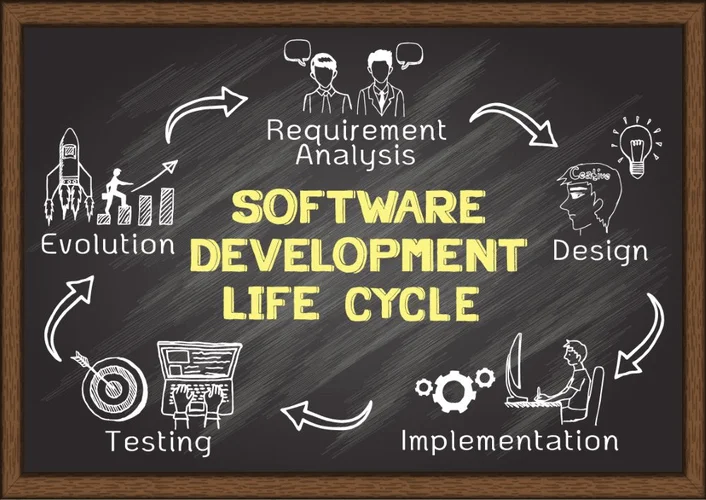
This requires a lot of research and planning to ensure that your final product meets your expectations . The big step is creating a detailed project plan document and work breakdown structure that outlines the requirements. Each stage in the SDLC has its own set of activities that need to https://www.globalcloudteam.com/glossary/software-life-cycle-model/ be performed by the team members involved in the development project. While the process timeline will vary from project to project, the SDLC generally follows the seven stages outlined below. Then comes the procedure of complete system optimization and the process of software structuring.
Vulnerability Assessment vs Penetration Testing
Early user access helps to define and address critical design and technical flaws. RAD Model focuses on developing working prototypes and improving the product according to user feedback. Small and medium-sized projects with well-detailed requirements. Spiral model suits for developing a brand new product that needs to accumulate enough user feedback. You can adjust the requirements and the technical specs of the project on the fly and at lower costs. Hardware development projects where there the new parts of a system should be compatible with the older ones.

By ensuring an excellent modularization program design mechanism, AOSD drastically reduces the design, maintenance, and development cost of the software. Furthermore, it addresses the cross-cutting issues which ensure small-sized codes. Unlike the Scrum model, the Extreme Programming model allows you to make alterations after the launch of iteration. The only condition is that the team should not work with the software. The model makes use of development based on several tests, pair programming, CI, uncomplicated program design, and small releases.
Lean model
Each SDLC model offers a unique process for your team’s various project challenges. The project’s specifications and intended results significantly influence which model to use. For example, the waterfall model works best for projects where your team has no or limited access to customers to provide constant feedback. However, the Agile model’s flexibility is preferred for complex projects with constantly changing requirements.
- The Lean SDLC model focuses on software efficiency and a quick delivery of the final result.
- The entire notion of this model is to optimize the process and resources.
- Tell us who catches your eye, and we can arrange an interview or placement ASAP.
- The term was first used to describe a software development process introduced by James Martin in 1991.
- This reduces the risk of customer dissatisfaction due to faulty or subpar software.
- Shaped work is documented in the form of a pitch using an online document solution that supports commenting, allowing team members to contribute technical information asynchronously.
Next, you must create strategies to solve uncertainties and reduce risks. If clients require in-depth documentation and information, it’s best to use heavier-weight techniques such as the v-shaped, waterfall, or iterative methods. These techniques are more in-depth and will give your clients the required information. On the other hand, there are several drawbacks to this model as well. Even though it may reduce the delivery cost, the overall cost is still on the higher side. In addition to that, it also needs the arrangement of cycles and requires a robust plan to make any alterations to the plan in case of any necessary changes.
Benefits of Using an SDLC Model
Some businesses value the Agile methodology so much that they apply it to other types of projects, including nontech initiatives. No matter which SDLC model you find most acceptable for your project, Echo can back your choice with a dedicated team of developers. Contact us today to discuss the optimal strategy of hiring tech experts for achieving your business needs. End-users may confuse a rough prototype with a completed product, thus threatening to reputation loss. Agile methodology phases enable early software prototype release. Large-scale projects that allow separating the development process into small standalone chunks.
If you’re unsure what software development process would work best for your project, consider using the Agile model. This approach is especially helpful when requirements are unclear. Still, there can be a possibility of missing out on some issues. The Aspect-Oriented Software Development approach is implemented to minimize this situation as much as possible. This model addresses the issues that may be missed by the aforementioned approaches. This model uses systematic identification, representation, separation, and composition to make software development effective and reduce crosscutting concerns.
Types of Software Development Life Cycle (SDLC) Models
The prototype software development model is based on the same psychology where the development team will understand the needs of users and create a program based on the information. The developers create a working prototype of the software and are continually developing and improving with the feedback its users provide. Upon the success of the prototype, the final software is put into production. Managing risk is among the most crucial aspects of every major task. The spiral model focuses on risk assessment and management in the software development lifecycle. As the name suggests, the graphical representation of this model appears to be in the shape of a spiral having several loops.